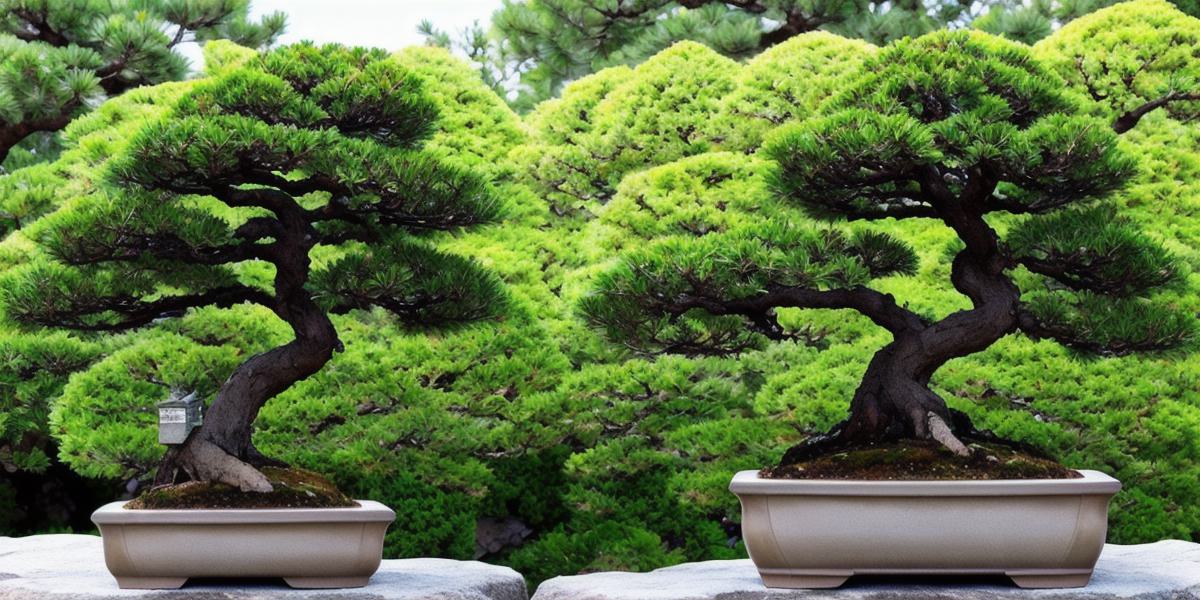
In today’s fast-paced world, taking care of a living thing can seem like an added responsibility that many people simply do not have the time or resources for. However, one small plant that has gained popularity in recent years is the bonsai tree, which requires minimal maintenance and can bring beauty and tranquility to any space. If you’re considering adding a bonsai tree to your home or garden, you may be wondering how old it is and if it needs to be replaced. In this article, we’ll explore different methods for determining the age of a bonsai tree and discuss their pros and cons.

Determining the Age of Your Bonsai Tree: A Practical Guide
The first thing you should know about your bonsai tree is its species. Different species have different growth rates, which means that the age of a bonsai tree can vary greatly depending on what type it is. For example, a juniper bonsai tree can live for hundreds of years, while a ficus lyrata bonsai tree has a lifespan of around 20-30 years.
Another factor to consider when determining the age of your bonsai tree is its size and overall appearance. Bonsai trees are typically small, with some measuring only a few inches in height. However, if your tree is much larger than what is typical for its species, it could be an indication that it has been well cared for over time.
One of the most common methods for determining the age of a bonsai tree is to look at the trunk. Many bonsai trees have visible growth rings that can help you estimate their age. To use this method, simply cut off a small section of the trunk and examine it closely. The number of rings present will give you an idea of how long the tree has been growing.
Another method for determining the age of a bonsai tree is to look at its foliage. Bonsai trees that are healthy and well cared for will have lush, green foliage. However, if your tree’s leaves are yellow or brown, it could be an indication that it has been stressed or is in need of care.
Using X-rays to Determine the Age of Your Bonsai Tree
One of the most accurate ways to determine the age of a bonsai tree is by using X-rays. This method involves taking a cross-sectional image of the trunk, which can reveal the growth rings that are present. By counting the number of growth rings, you can estimate the age of your bonsai tree with a high degree of accuracy.
While this method may be more accurate than other methods, it is also more expensive and time-consuming. In addition, X-rays can expose the bonsai tree to harmful radiation, which could potentially damage its health. Therefore, this method should only be used as a last resort.
Factors to Consider When Determining the Age of Your Bonsai Tree
When determining the age of your bonsai tree, it’s important to consider several factors, including its species, size, and overall appearance. Different species have different growth rates, which means that the age of a bonsai tree can vary greatly depending on what type it is.
Another factor to consider is the care and maintenance that your bonsai tree has received over time. Bonsai trees that are well cared for will have healthy foliage and will generally look more vibrant than those that have been neglected or mistreated.
It’s also important to keep in mind that age is just one factor to consider when determining the overall health and vitality of your bonsai tree. Other factors, such as soil quality, sunlight exposure, and watering habits, can also play a role in the health of your bonsai tree.
The Pros and Cons of Different Methods for Determining the Age of Your Bonsai Tree
The most common methods for determining the age of a bonsai tree are to look at its trunk or foliage, or to use X-rays. Each of these methods has its own pros and cons.
Looking at the Trunk or Foliage is Simple and Affordable
The simplest and most affordable method for determining the age of your bonsai tree is to look at its trunk or foliage. This method involves counting the growth rings in the trunk or examining the overall health of the foliage. While this method may not be as accurate as X-rays, it’s a quick and easy way to estimate the age of your bonsai tree without any specialized equipment or training.
Using X-Rays is More Accurate but Also More Expensive and Time-Consuming
X-rays are the most accurate method for determining the age of a bonsai tree, as they allow you to count the growth rings in the trunk with a high degree of accuracy. However, this method is also more expensive and time-consuming than other methods. In addition, X-rays can expose the bonsai tree to harmful radiation, which could potentially damage its health. Therefore, this method should only be used as a last resort.
Summary
Bonsai trees are a timeless art form that can bring beauty and tranquility to any space. Determining the age of your bonsai tree is an important aspect of maintaining its overall health and vitality, as different species have different growth rates and require varying levels of care. While there are several methods for determining the age of your bonsai tree, each has its own pros and cons. By considering factors such as its species, size, and overall appearance, you can estimate the age of your bonsai tree with a high degree of accuracy using simple and affordable methods.